THE AMERICAN ROOM
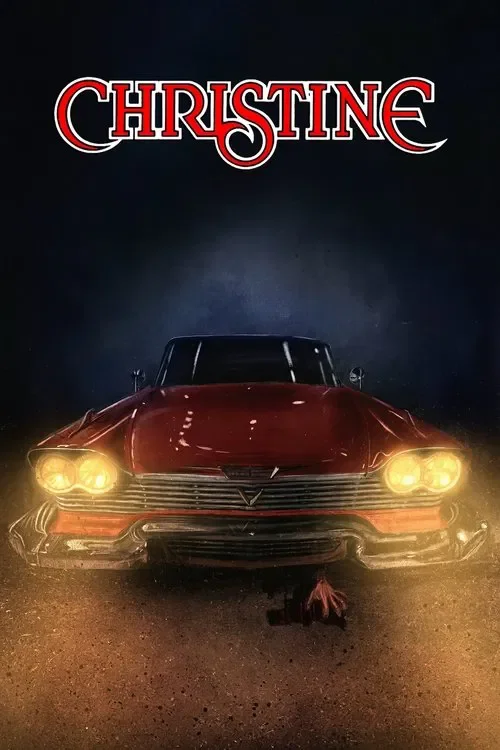
Christine - 1958 Plymouth Fury
Plymouth existed between 1928 and 2001, as part of the Chrysler Corporation. The brand was launched in 1928 to compete in what was then described as the "low-priced" market segment that was dominated by Chevrolet and Ford. It became a high-volume seller for the automaker until the late 1990s.The ‘Fury’ model began production in 1955, continuing until 1989 in many different forms. Between 1956 and 1958, it was a sub-model of the Belvedere, as a higher trim-level. Just 5,303 Plymouth Fury cars were produced in 1958. They were powered by a 350-cubic-inch V8, producing 300 horsepower and were fitted with a three-speed TorqueFlite transmission. In the movie, 17 different 1958 Plymouth cars were used, however not all were Furys and many were lower-cost models such as Belvederes and Savoys. The Fury is best known for featuring in the 1983 movie “Christine”, based on a novel by Stephen King of the same name. The eponymous 1983 horror film originated from a novel, penned by Stephen King. Although director John Carpenter made minor alterations for cinema, the plot remained basically the same. High school outcast Arnie Cunningham purchases and restores a decrepit 1958 Plymouth, “Christine”, despite his best friend’s protests. Slowly, it becomes apparent that the car is sentient, and Christine’s possessive and malicious nature holds dire consequences for anyone close to her new owner. King described Christine as a ’58 Fury. However, the 1958 Plymouth Fury was available only in Buckskin Beige, and the Belvedere was deemed a more appropriate fit. However, Plazas, Belvederes and Furies, mocked up as ‘Christine clones’, were all used during filming. Stephen King stated in an interview that he chose the Plymouth very deliberately, as it was something of a forgotten model: ‘I didn’t want a car with a legend already attached to it, like the fifties Thunderbird or Chev’.
1966 Shelby Mustang GT350H Replica
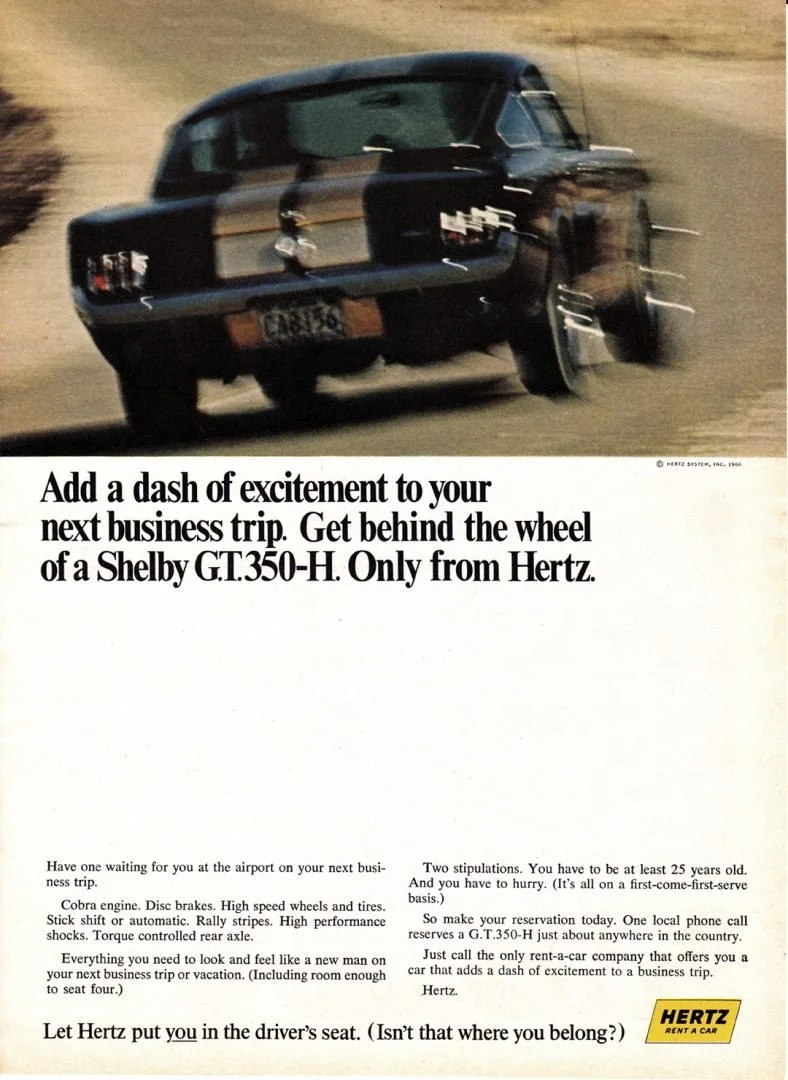
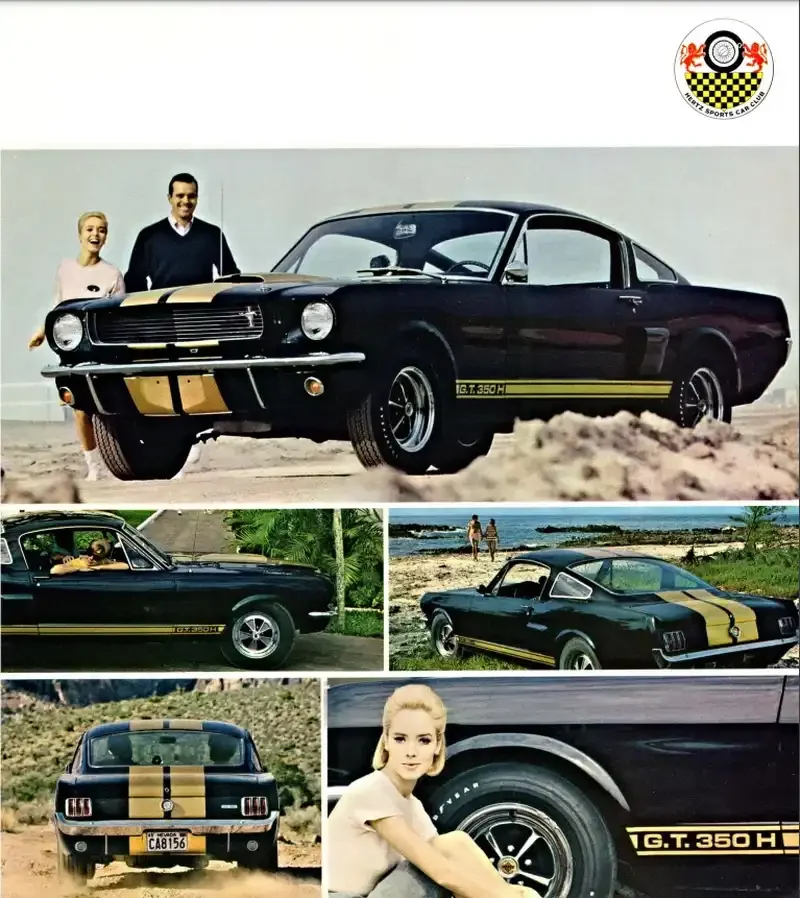
Affectionately known as the "Rent-a-Racer," the Shelby GT350-H debuted in September 1965 through a partnership between the Hertz Corporation and Shelby American. Powered by Shelby's high-performance Cobra 289 cubic-inch V8, the GT350-H produced 306 horsepower and 329 lb-ft of torque, making it one of the fastest rental cars ever offered to the public. Just 1,001 examples were built, and many endured a hard life at the hands of enthusiastic renters. Legendary stories tell of cars being returned to Hertz with evidence that roll cages had been welded into place, while others were reportedly raced on weekends before being returned on Monday as though nothing had happened. Exactly how many original GT350-Hs survive today is unknown, with genuine examples now among the most collectible and sought-after Shelby Mustangs. Under the agreement between Hertz and Ford, the cars were returned to Ford at the end of their rental service, refurbished, and sold to the public as GT350-H models. However, many of the high-performance racing components fitted during their rental days had mysteriously "disappeared" before the cars reached their new owners. The Mustang on display is a replica of a GT350-H and has been constructed to meticulous standards by the owner over a long period.
1969 Chevrolet Camaro Z/28
Entering the market in 1966 as a competitor the ever-popular Ford Mustang, the Chevrolet Camaro was available with a range of optional engine and appearance packages. The vehicle on display is finished in the factory-original ‘Frost Green’ paintwork, with a ‘Midnight Green’ interior. The vehicle is the result of an extensive 8-year long restoration. It is powered by the factory-fitted 302 cubic-inch ‘Turbo-Fire’ V8, transmitted through a 4-speed ‘Muncie’ manual transmission. The Z28 package included heavy-duty suspension, clutch and a sportier steering-ratio. Controversy arose surrounding factory output, as Chevrolet claimed 290 horsepower as the official figure while period tests shifted this number closer to 375! While not the largest engine available, the 302 cubic-inch V8 had origins in Trans-Am cars of the 1960s and was a thinly-veiled race engine in a road car available to the general public.
1962 Studebaker Gran Turismo Hawk
Produced between 1962 and 1964, the Gran Turismo Hawk was the top-of-the-line Studebaker model. It was an evolution of earlier Hawk cars, beginning with the Golden Hawk of 1956. Studebaker was undergoing financial difficulties at the time of design, leading to the flagship model being almost mechanically identical to many other models in the lineup. 400 examples were assembled in Australia by Studebaker, powered by either a 4.2 litre, or 4.7 litre V8. The car featured European-inspired styling, penned by designer Brooks Stevens on a miniscule budget. The vehicle on display has undergone an extensive restoration by Peter Leech. Unfortunately, the new range of models was not enough to alleviate poor sales performance and the last car rolled off the production line on March 17th, 1966. Studebaker was officially defunct in November of 1967, ending an automotive legacy that began 65 years earlier.
1941 Indian Four (Model 441)
In the late nineteen-twenties, Indian purchased the assets of the ACE motorcycle corporation. Indian proceeded to manufacture the Indian-ACE until 1928 when the Indian Four took its place – designed by Arthur O. Lemon. Despite the low demand for luxury motorcycles during the Great Depression, Indian not only continued production of the Four, but continued to develop the motorcycle. For 1940, the Four frame was modified to include plunger rear suspension. In the same year, all Indian models were restyled with large, decorative fenders. In 1941, the 18-inch wheels of previous models were replaced with 16-inch wheels with balloon tires. The motorcycle on display is powered by a 77-cubic-inch aircooled inline-four, producing 30 horsepower. The Indian Four was discontinued in 1942. The motorcycle on display was privately imported to Australia from Ohio.
Patman & McDonald Pty Ltd was Launceston’s Harley-Davidson dealer during the late 1930s and early 1940s, operating from 186 Charles Street. The company was closely involved in Tasmania’s thriving beach racing scene, using competition success to demonstrate the performance and reliability of Harley-Davidson motorcycles.
This 1940 advertisement celebrates a series of speed records achieved by local riders at Baker’s Beach and Two Mile Beach. Most notably, Clyde Patman and passenger Bill Butler reached 105.8 mph (170 km/h) on a standard Harley-Davidson sidecar outfit, which was promoted as the fastest sidecar motorcycle in Australia at the time. The advertisement highlights the important role that Tasmanian riders and dealers played in establishing Harley-Davidson’s reputation for speed and endurance.
1936 Harley-Davidson
Presented in original unrestored condition, this Harley-Davidson has been with the same owner for the past fifty-five years. Its first owner operated Patman and McDonald, Launceston’s only Harley-Davidson dealer at the time. As shown in the poster, this motorcycle (with sidecar attached) was clocked on 2 Mile Beach at 92.7mph. In 1939, the 74-cubic-inch (1,210cc) VL Flathead replaced the old JD Big Twin. The VL had a single downtube frame and total-loss oiling, culminating in an 80-cubic-inch (1,300cc) version (VLH) in 1935. In 1937, that engine was redesigned to include a recirculating lubrication system, and designated the Model U, and it went into the same frame and running gear configuration as the model E Knucklehead, which had originated in 1936.
Watercolour Paintings
Born in Brunswick, Victoria in 1862, Gladstone Eyre first studied painting under Van den Houten, later moving to Sydney where he resumed studies under Knud Bull. Throughout the 1880s, he established himself as a fine portrait painter. Moving with his family to Launceston in 1891, he commenced work with Richard John Nicholas (1843 - 1910), photographer of St John Street often displaying his paintings in the shopfront of his studio. Throughout the following ten years he painted Land and Seascapes of many Tasmanian locations - (Oils and Watercolours) from both life and photographs, while continuing to render portrait commissions. Eyre also conducted evening classes where drawing, painting and outdoor sketching were taught to students at his St John Street studio, and in 1893 exhibited at the Tasmanian Juvenile Industrial exhibiton in Launceston. Returning to Sydney in 1902, he travelled and continued to paint prolifically in many parts of New South Wales until his death by drowning in Sydney Harbour in 1933.